|
 |
 |
 |
 |
||
 |
 |
 |
 |
 |
||
 |
 |
 |
 |
 |
||
 |
 |
 |
 |
 |
||
 |
 |
 |
 |
 |
||
|
|
||||||
|
Our beloved diving raft/dock, “The Rungcole Float”: | ||||||
|
|
||||||
|
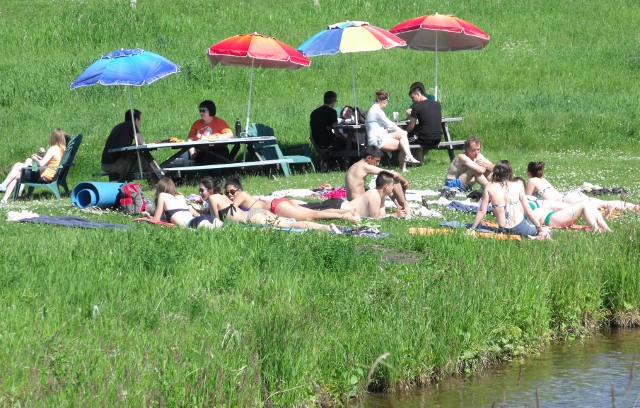
NGO members re-creating by the pond
Other
Attractions: Many
guests visit our lodge not as a destination in itself but as a central home
base from which to visit the many other attractions in central Alberta. First
and foremost is the idea that our lodge is situated mid-way between Edmonton and Calgary close to Jasper
and Banff National Parks. We’re only a couple hours from The Royal Tyrrell
Museum of Paleontology in Drumheller and Lake Louise: much closer than that to West Edmonton
Mall and the Reynolds Museum in Wetaskiwin. Dozens of lakes and golf courses
pepper the maps of this area and yet we’re quite secluded in the forest, on the edge of a vast green belt
stretching to the Rockies. |
||||||
|
|
||||||
| Although we are quite isolated on the edge of a vast greenbelt stretching all the way to the mountains, we’re aware of our vulnerability to the development pressuring other regions of west central Alberta, especially the eastern slopes. The best loved water-basins have already been choked off by recreational development. Cottagers continue to encroach on shorelines with local publications in a sew-saw polemic between those favoring economic development and those sensitive to water quality and riparian zones. Until recently, the former have dominated but as hydrological issues become ever more important, eventually, the more far sighted, the latter, along with nature itself will predominate. Kramer Pond offers an alternative for twenty first century shoreline development as reclamation projects throughout North America begin to claw back waterfront and drainage basins in order to reconstitute surface and subterranean aquifers. The general idea is to ascertain major and minor inflows as well as outflows into these bodies of fresh water, determine minimum and maximum levels at which they can remain healthy, then create small dams up and down stream allowing for reconstituted marshlands, broad frontal woodlands, and a sustainable percentage of shoreline demarcated for recreational purposes. This allows those major water basins to be replenished, as well as the riparian zones which feed them, and the underground aquifers. | ||||||